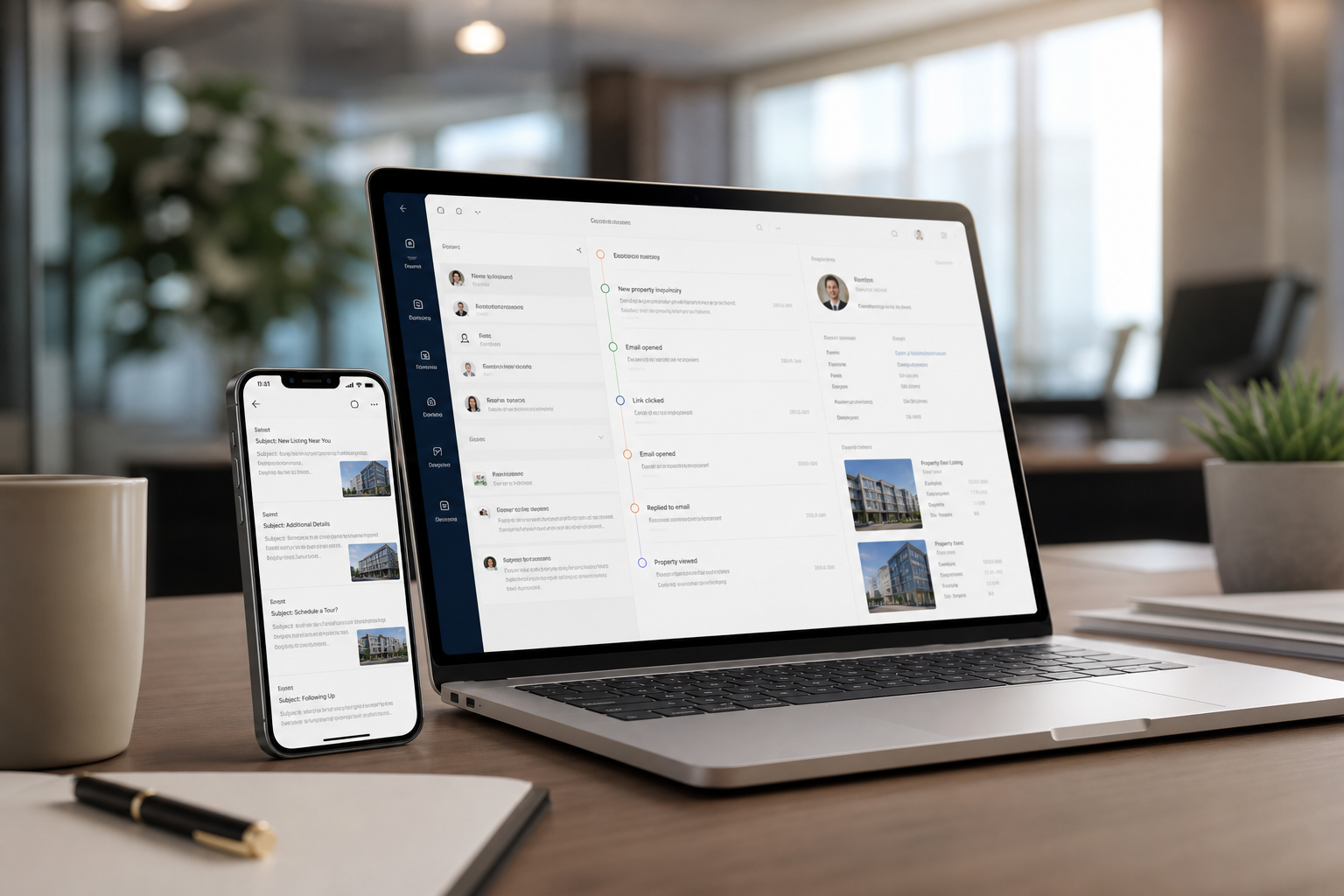
Why speed and context both matter
Commercial real estate buyers do not wait. When an investor downloads an offering memorandum or submits an inquiry through a property website, they are usually evaluating several options simultaneously. The brokerage that responds first—with specific knowledge of the property they asked about—gets the conversation. The one that sends a generic "thanks for reaching out" three days later gets ignored.
Speed alone is not enough. An agent who responds in twenty minutes but asks "which property were you interested in?" has already signalled that the brokerage is disorganized. Context alone is not enough either—a perfectly researched follow-up sent forty-eight hours later often arrives after the buyer has moved on.
The combination is what converts: fast response with listing-specific details—size, pricing, asset type, and a relevant next step. This is the operational standard a Commercial real estate CRM should enable, not something individual agents achieve through discipline alone.
A simple follow-up cadence
Complex sequences fail in CRE because deal timelines vary too much for rigid automation. A simpler four-touch cadence works across most asset types and deal sizes.
Touch 1 — Immediate (within two hours). Personalized response referencing the specific property. Include one relevant detail the buyer may not have seen—recent tenant activity, comparable sale, or upcoming open house. Attach the OM if they have not downloaded it yet.
Touch 2 — Day three. Additional context: market data, co-tenancy information, or a comparable property if the original listing may not fit their criteria. Keep it short.
Touch 3 — Day seven. Direct question about their timeline and requirements. "Are you actively evaluating industrial properties in this submarket, or still in early research?" This separates serious buyers from browsers.
Touch 4 — Day fourteen. Final active touch. If no engagement, offer an alternative listing or move to a quarterly nurture sequence. Continuing to pursue a non-responsive lead beyond two weeks wastes agent time and damages sender reputation on email.
Each touch should pull property data from the listing record—not from memory or a separate spreadsheet.
Tie every lead to a listing
The single highest-leverage fix in CRE follow-up is ensuring every inquiry arrives linked to a listing.
When a lead comes in without listing context, the agent's first action is research—not relationship building. They open the marketing platform to find which campaign ran, check the property website logs, or email marketing to ask which listing the contact inquired about. That delay costs deals.
Listing-linked lead capture means:
- Property website inquiries attach to the listing automatically
- OM download events create or update a contact with the source listing
- Email campaign responses include the listing that triggered the send
- Broker network alerts reference the specific asset
This architecture is foundational to any serious CRM evaluation. Our CRE CRM buyer's guide covers how to test this during a pilot.
Handoffs between marketing and agents
Follow-up breaks down at the handoff more often than during the sequence itself.
Marketing's job: Instant acknowledgment with property context, broker contact information, and clear expectation of when the agent will follow up. Not a generic auto-reply—a branded response that confirms which property the buyer asked about.
Agent's job: Substantive response within the SLA. Reference the property, propose a next step (call, tour, additional materials), and log the interaction in the CRM.
Operations' job: Monitor handoff compliance. If marketing sends acknowledgment but the agent does not follow up within two hours, the principal should see that gap—not discover it weeks later in a pipeline review.
Define ownership explicitly. When everyone owns follow-up, nobody does.
Metrics that actually help
Principals often track the wrong numbers. Total contacts added and emails sent measure activity, not outcomes.
Track these instead:
- Median response time from inquiry to agent contact, by listing and by agent
- Inquiry-to-conversation rate — what percentage of leads result in a two-way exchange
- Conversation-to-tour rate — the step that actually indicates serious interest
- Lead source attribution — which listings and campaigns produce qualified inquiries, not just volume
Review monthly. A single agent with a four-hour median response time on a high-value listing is a coaching conversation, not a system problem. A team-wide twelve-hour median is a system problem.
How Antela supports follow-up
Antela routes every lead—property website inquiry, OM download, email response, broker alert—with the listing attached and financial context visible before the agent opens the record. Follow-up sequences reference specific property data pulled from the listing record, and listing changes propagate to active sequences automatically.
CRM, marketing, and listings share one data layer, so the handoff from marketing acknowledgment to agent conversation happens in one system—not across three tools with a spreadsheet bridging the gap.
Full workflow detail lives on the Commercial real estate CRM page. For the broader evaluation framework, see our CRE CRM vs Salesforce vs HubSpot comparison.
Try with one listing and run a real inbound lead through the follow-up workflow, or book a demo with your current process.
Ready to see this on one of your listings?
Continue to Antela's Commercial real estate CRM — or try the workflow with one listing and book a demo when you're ready.
Frequently asked questions
How fast should a brokerage respond to a CRE inquiry?
Under two hours during business hours, and within twelve hours for after-hours inquiries. CRE buyers often contact multiple brokerages simultaneously; the firm that responds first with relevant property context usually wins the conversation. Speed without context—a generic 'thanks for your interest'—converts poorly, so both matter together.
What follow-up cadence works best for CRE leads?
A four-touch sequence over fourteen days: immediate personalized response with property details, day-three follow-up with additional asset information or comparable properties, day-seven check-in with a direct question about timeline, and day-fourteen final touch with an alternative listing if the original did not fit. Beyond fourteen days without engagement, move the contact to a nurture list rather than continuing active pursuit.
Should marketing or agents own initial lead response?
Marketing should acknowledge receipt instantly with property context and broker contact information. Agents should own the substantive conversation within the two-hour SLA. The handoff fails when marketing sends a generic auto-reply and the agent does not see the lead until the next morning—or when agents receive leads without knowing which listing triggered the inquiry.
How do you follow up on OM downloads vs email opens?
OM downloads signal serious interest and warrant a direct call or personalized email within two hours referencing specific property details. Email opens are softer signals—include in the next scheduled touch but do not treat as urgent. Your CRM should distinguish these event types automatically rather than requiring agents to check separate marketing dashboards.
What metrics should a principal track for follow-up?
Response time median, conversion rate from inquiry to conversation, conversion from conversation to tour, and lead source attribution by listing. Avoid vanity metrics like total contacts added or emails sent—these measure activity, not outcomes. A team responding in four hours with a 30 percent conversation rate outperforms one responding in thirty minutes with a 5 percent rate.
Related Reading
More in CRMCRM
Commercial Real Estate CRM Buyer's Guide
Buyer's guide to commercial real estate CRM—pipelines, listing-linked leads, follow-up, and how CRE CRM differs from generic sales CRM.
CRM
CRE CRM vs Salesforce vs HubSpot
Compare commercial real estate CRM needs with Salesforce and HubSpot—what each does well and when brokerages need a CRE-native platform.