Listing intake automation
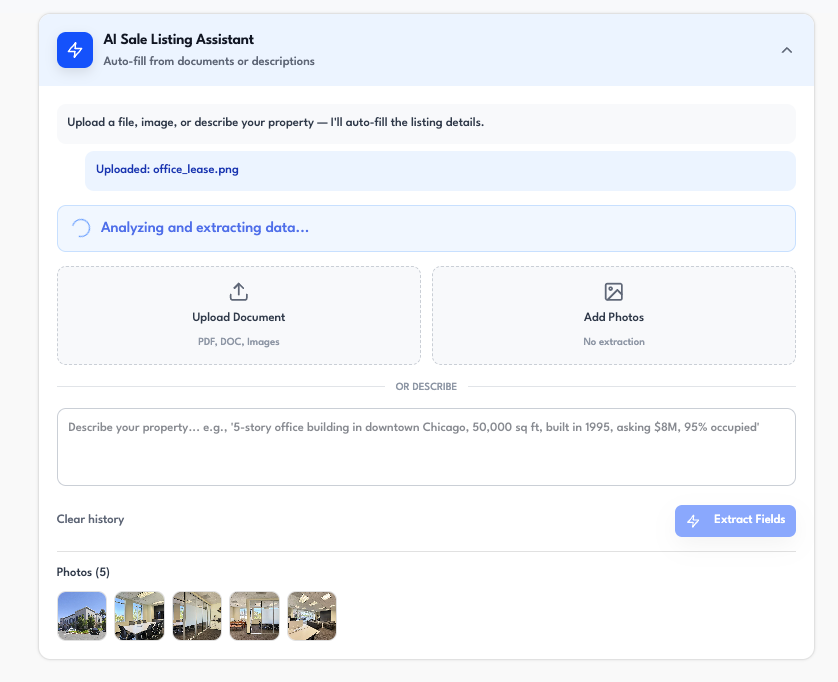
Extract addresses, sizes, rents, and investment fields from source docs instead of retyping into five templates.
Antela — CRE automation
Commercial real estate automation software that automates listing intake, OM generation, campaigns, follow-up, and brokerage workflows.
Related: Antela Marketing Center.
Extract addresses, sizes, rents, and investment fields from source docs instead of retyping into five templates.
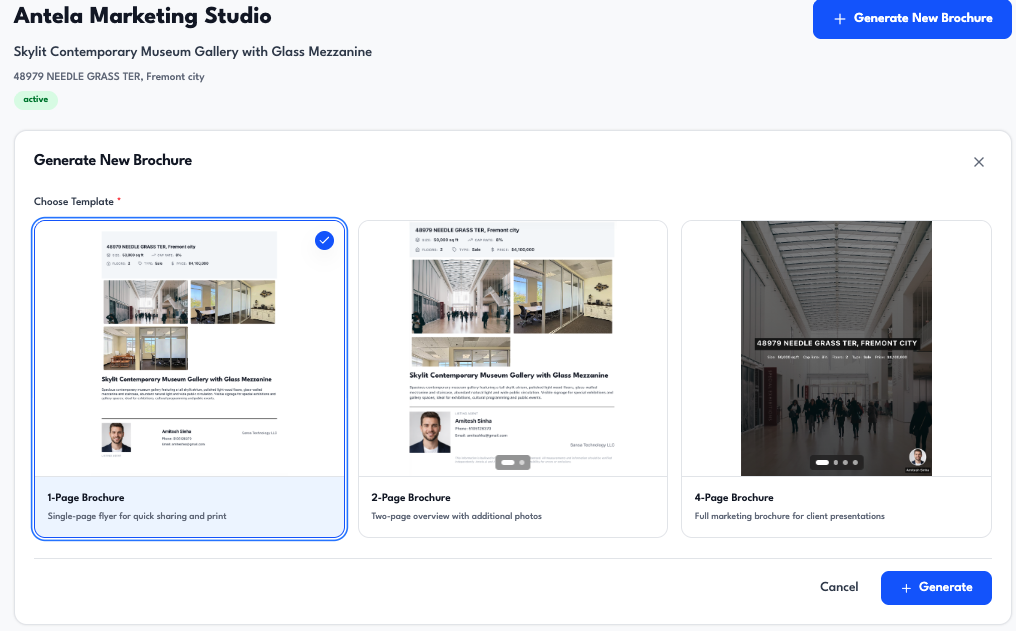
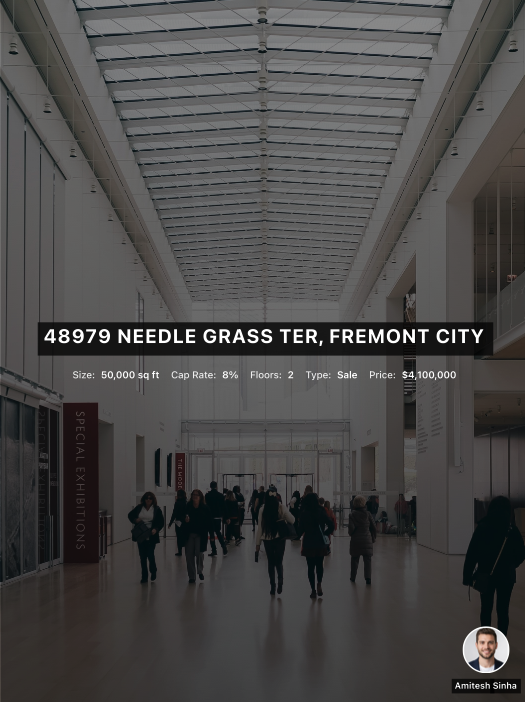
Generate OM drafts, brochures, maps, and campaign assets from the listing record with brand templates applied.
When assumptions change, regenerate dependent assets from one source of truth—not five stale files.
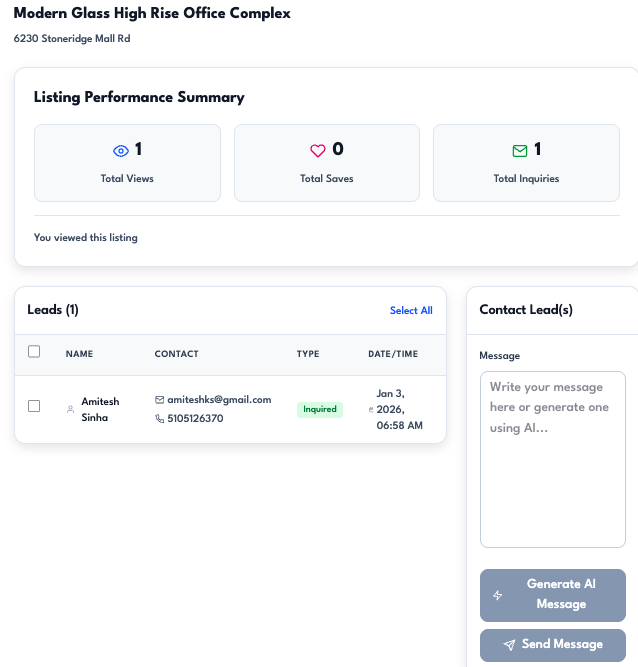
Score intent, prioritize outreach, and draft follow-ups tied to the listing that triggered interest.
Automate mechanical work; keep brokers and marketing leads on thesis, pricing posture, and approvals.
Track hours from engagement to launch before and after automation—not vanity feature usage.
Commercial real estate automation software helps brokerage teams remove repetitive work from listing, marketing, CRM, and document workflows—without removing professional judgment. It is the difference between rebuilding an offering memorandum by hand every time NOI changes and regenerating tables and layouts from an updated listing record.
Automation in CRE is not “set and forget marketing.” Investor packages, leasing campaigns, and owner reporting still require human review. The software should accelerate intake, formatting, distribution setup, and follow-up drafting while preserving brand controls and approval gates.
Antela embeds automation inside an AI operating system: listing extraction, marketing generation, CRM assist, and document intelligence share the same property context. Use this page for automation intent; use commercial real estate marketing software and commercial real estate CRM for product-depth pages.
High-ROI automation targets mechanical steps: parsing rent rolls and offering documents, filling structured listing fields, applying brokerage templates, assembling first-draft OMs and brochures, resizing creatives for email and social, scheduling launch sequences, and routing leads to the right desk.
Low-ROI automation pretends to replace comps selection, investment thesis, and relationship nuance. Those remain human. Teams that automate the pitch instead of the production create brand and trust risk.
A practical rule: if a step is retyping, reformatting, or copying the same number into three places, automate it. If a step changes the story an owner or investor hears, keep a human accountable.
Volume changes the math. A firm launching two listings a month feels different pain than a firm launching two a week. Automation ROI compounds with concurrent deals and revision frequency—not with how impressive a demo looks on a clean sample property.
The listing-to-market path is where most brokerages lose days. Source docs arrive incomplete. Coordinators rebuild fields. Design waits on final numbers. Email waits on design. By launch, the OM and brochure already disagree.
Automation software should start at intake: extract what can be extracted, flag gaps, and lock a structured listing record. Commercial real estate listing software inside Antela supports draft-to-publish so teams review once and publish when ready.
From that record, marketing automation can produce the coordinated package—teaser, brochure, OM, microsite, and outreach creatives—without restarting from a blank Canva file. See how to automate commercial real estate marketing for a 30-day rollout pattern.
Treat listing-to-market as one workflow with stages, not five projects. When ownership is fragmented (“marketing owns the OM, agents own email, ops owns the website”), automation still helps—but only if every stage reads the same listing record.
Offering memorandum automation is the flagship win for investment sales. Upload source materials, draft financial tables and narrative sections, apply branding, route for approval, and export. Offering memorandum software is the product surface; automation is the operating principle behind it.
Brochure, map, email, and social automation should reuse the same facts. That is why CRE marketing software beats a pile of design templates: the listing record is the automation input, not a PDF someone emailed last week.
Approvals remain non-negotiable. Automate assembly; require review for investor-facing claims, disclaimers, and pricing. The fastest teams are not the ones who skip QA—they are the ones who stopped rebuilding layouts from scratch.
Lead response speed still wins deals. Commercial real estate automation software should capture inquiries from listing channels, score intent, and draft follow-ups that reference the correct property—then let brokers personalize and send.
Pipeline automation helps managers see stalled stages and missing next steps. It should not auto-spam contacts with generic sequences that ignore CRE relationship norms. Antela’s commercial real estate CRM focuses on ranking and assisted outreach tied to listing activity.
The highest-value CRM automations are boring: capture every inquiry, attach it to the listing, draft a first response, and remind the desk when nothing happened in 24 hours. Fancy sequence builders without listing context are how brokerages burn relationships.
Automation fails publicly when brand standards, disclaimers, or wrong numbers ship. Brokerages need template locks, role-based approvals, and clear ownership of final publish rights.
Good automation software makes the safe path the fast path: agents get speed because templates and extraction are ready; marketing and principals keep control because review is built in.
If you are evaluating platforms, ask vendors to demo a revision cycle—not only a happy-path first draft. Changing cap rate assumptions mid-campaign is the real stress test.
Before automation: coordinators retype rent rolls into spreadsheets, designers rebuild brochure pages, marketers copy numbers into email tools, and agents wait. A pricing change mid-week restarts half the work. Version names proliferate—“FINAL_v7_real_final.pdf”—and nobody trusts which file investors saw.
After automation: source documents populate a listing record once. OM and brochure drafts assemble from templates. Campaign creatives inherit the same facts. When NOI changes, regeneration updates dependent assets so review is about judgment, not retyping.
The cultural shift is subtle but important. Marketing stops being a bottleneck that agents work around. Agents stop shipping off-brand one-offs because the approved path is faster. Leadership stops asking for status updates that require three tools to answer.
Days 1–7: pick one painful workflow—usually OM production or listing launch. Capture baseline hours. Assign a template owner and an approval owner. Import brand assets.
Days 8–21: run two live listings with approvals on. Include at least one revision cycle. Train on outcomes (“ship an OM”) not feature tours. Log defects: wrong disclaimer, missing field, slow approval.
Days 22–30: compare KPIs to baseline. Fix template gaps. Expand to one adjacent workflow (email/social or CRM follow-up drafts). Decide whether to add desks—not whether to abandon the pilot after one awkward week.
Use the CRE automation playbook and what to automate in a CRE brokerage articles for checklists. Confirm packaging on pricing and estimate impact with the ROI calculator.
Automating the pitch before the data layer. If the listing record is wrong, automation multiplies wrongness across every channel.
Skipping approvals to “go faster.” Speed without brand control creates the exact reputational incidents principals fear—and then they ban the tools.
Buying five point automations that do not share a listing record. You will recreate integration tax under a prettier name.
Measuring vanity metrics (assets generated) instead of cycle time, revision turnaround, and lead response. Feature adoption is not ROI.
Antela automates across the brokerage stack—listings, Marketing Center, CRM, documents, and AI Copilot—so automation compounds instead of living in one silo. Confirm pricing on our pricing page and estimate impact with the ROI calculator.
Start with one painful workflow: OM production or listing launch. Book a demo, or try with one listing and measure hours saved on the next live deal.
When you are ready to zoom out from workflow automation to platform architecture, continue on the commercial real estate operating system page.
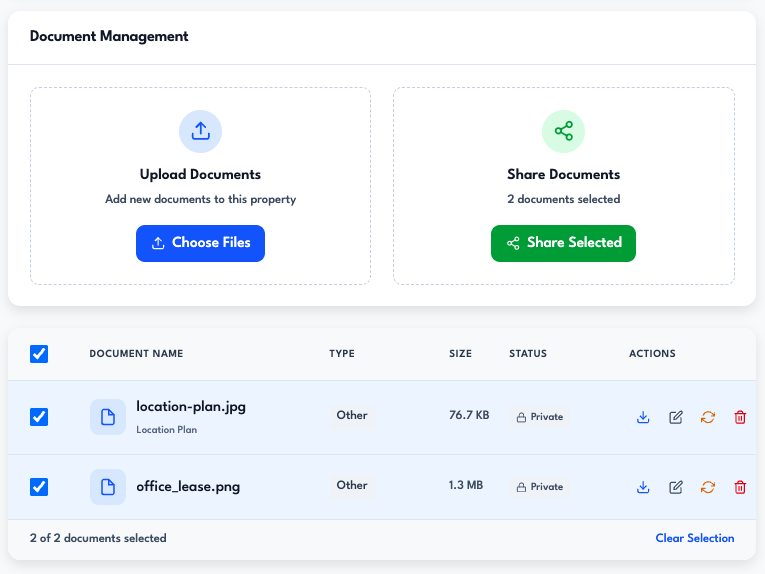
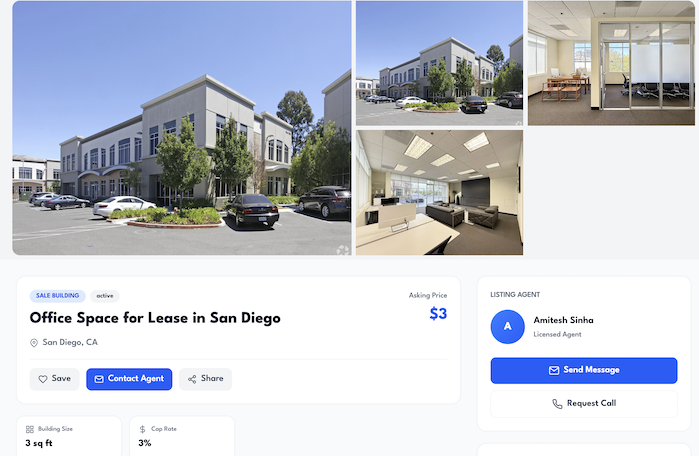
OMs, brochures, websites, maps, email, and social from one listing.
What to automate first, guardrails, KPIs, and a 30-day rollout.
Listings, marketing, CRM, and documents—automate vs decide.
Upload-to-OM automation with financials, branding, and approvals.
Lead capture, scoring, and follow-up tied to listing activity.
How automation fits inside a full brokerage OS.
Practical rollout guide for marketing automation.
Brokerage outcomes and adoption patterns.
“We needed one listing record that marketing and CRM could trust—not five tools fighting over the same rent roll.”
Managing Broker
Boutique investment sales
“The win was revision speed. When assumptions change, we regenerate the package instead of hunting files.”
Marketing Director
Multi-office brokerage
“AI drafts get us to a reviewable OM faster. Approvals stay human—and that is exactly how we want it.”
Capital Markets Lead
Regional CRE firm
Want to be featured? Talk with us about a customer story once your team is live on Antela.
How to buy commercial real estate AI software: use cases, trust requirements, bake-off tests, and questions that separate CRE-native platforms from chat wrappers.
A practical playbook for commercial real estate automation: what to automate first, guardrails, KPIs, and a 30-day rollout.
A practical list of what commercial real estate brokerages should automate—and what should stay human—across listings, marketing, CRM, and documents.
CRE automation software reduces repetitive work in listings, marketing, CRM, and documents—extracting data, assembling assets, and assisting follow-up—while keeping humans responsible for judgment and approvals.
Start with listing intake and marketing production (OM/brochure drafts and campaign assembly). Those steps consume hours and create version errors. Automate CRM follow-up drafts next, with human send control.
Related but not identical. AI enables smarter extraction and drafting; automation is the workflow that runs those steps repeatedly with templates and approvals. See our commercial real estate AI software page for capability depth.
No. It changes their work from reformatting to quality control, brand governance, and higher-volume campaign orchestration. Most teams reclaim capacity rather than eliminate roles.
Track hours from engagement to first investor-ready package, revision turnaround after pricing changes, and lead response time. Feature adoption alone is a weak KPI.
Thirty days is enough for most brokerages if you include two live listings and at least one revision cycle. Shorter pilots usually only test happy-path first drafts.
Shipping wrong numbers or off-brand disclaimers at higher volume. Require template locks and human approval for investor-facing materials before expanding automation beyond drafts.
Continue to Antela's commercial real estate automation software — or try the workflow with one listing and book a demo when you're ready.