One system of record
Listings, marketing assets, CRM activity, and documents share the same property facts—so revisions do not spawn five conflicting versions.
Category landing page
Antela is the AI operating system for commercial real estate brokerages—listings, marketing, CRM, documents, and workflows around shared brokerage data so brokers win more deals and close listings faster.
An AI operating system for commercial real estate brokerages connects listings, marketing, CRM, documents, and workflows around shared brokerage data. Instead of re-entering the same property facts into disconnected tools, brokers use that data across the deal lifecycle. Antela is built specifically for CRE brokerages, helping brokers win more deals and close listings faster.
Listings, marketing assets, CRM activity, and documents share the same property facts—so revisions do not spawn five conflicting versions.
An operating system connects intake → publish → market → follow-up → closeout as one path instead of a stack of disconnected apps.
Templates, brand controls, and approvals let every desk ship consistent work without reinventing process on every deal.
Copilot and automation sit on brokerage data—not a chat window bolted onto yesterday’s file folders.
Managing brokers see marketing throughput, pipeline activity, and where deals stall—without spreadsheet archaeology.
Teams leaving legacy suites can pilot one listing, prove cycle-time wins, then expand desk by desk.
An AI operating system for commercial real estate brokerages connects listings, marketing, CRM, documents, and workflows around shared brokerage data. Instead of brokers repeatedly entering the same property information into disconnected tools, the operating system uses that data across the lifecycle—from winning the listing through marketing, lead follow-up, and deal execution.
In practical terms, a CRE operating system answers a simple question: when a rent roll changes on Tuesday, do the offering memorandum, brochure, microsite, email campaign, and CRM notes update from the same source—or does the team chase files across Word, Canva, Dropbox, and three inboxes?
Antela is an AI operating system built specifically for commercial real estate brokerages, helping brokers win more deals and close listings faster. The category page you are reading explains the operating-system idea. Our commercial real estate brokerage software page covers the suite buyers evaluate; our AI for commercial real estate page covers intelligence and copilots inside that stack.
A useful CRE operating system follows the deal path end to end: Win Business → Create Listing → Market → Syndicate → Generate Leads → Nurture → Close. Pre-listing work such as BOVs and pitches should feed the same property record that later powers the OM, brochure, and CRM follow-up.
Instead of separate tools for listings, OMs, brochures, CRM, documents, and follow-up, Antela connects the brokerage workflow around a shared listing record. Marketing regenerates from updated facts; inquiries stay tied to the property; documents stay in deal context.
That shared-record model is the difference between a stack with a shared login and an operating system: each stage reads and writes the same listing truth rather than restarting copy-paste between apps.
Buyers often compare three labels that sound similar but solve different jobs. A CRM tracks people, pipelines, and follow-up. A marketing suite produces collateral and campaigns. A commercial real estate operating system includes both—and also listings, documents, approvals, and the institutional knowledge that should compound across deals.
If your team only needs better email sequences, start with CRM evaluation. If your bottleneck is OM and brochure production, start with commercial real estate marketing software. If leadership wants one platform where listing data becomes market-ready work without glue code, you are shopping for an operating system.
The wrong purchase pattern is stacking best-of-breed tools without a shared listing record. Each tool can look strong in a demo and still leave the brokerage slower after go-live because every revision restarts the integration tax.
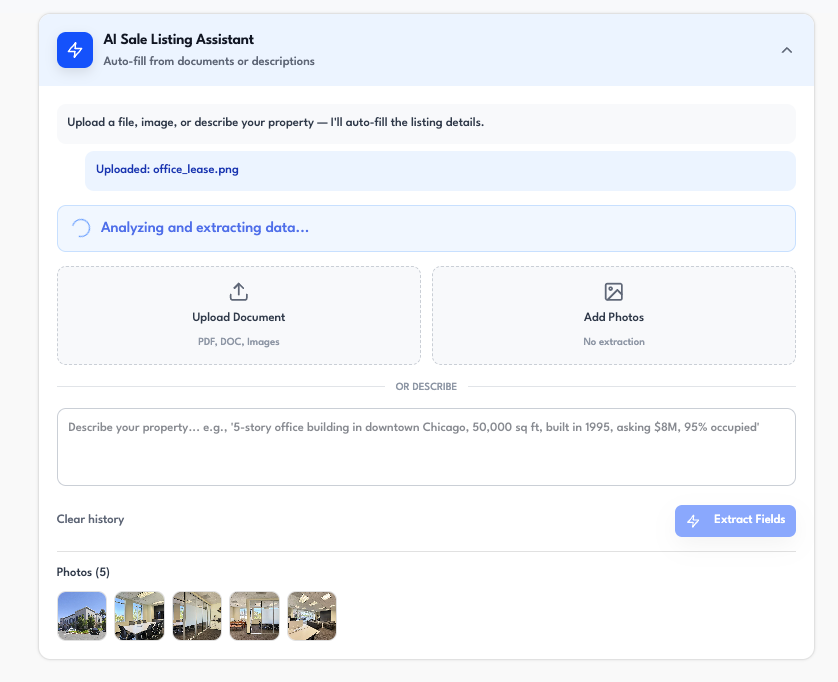
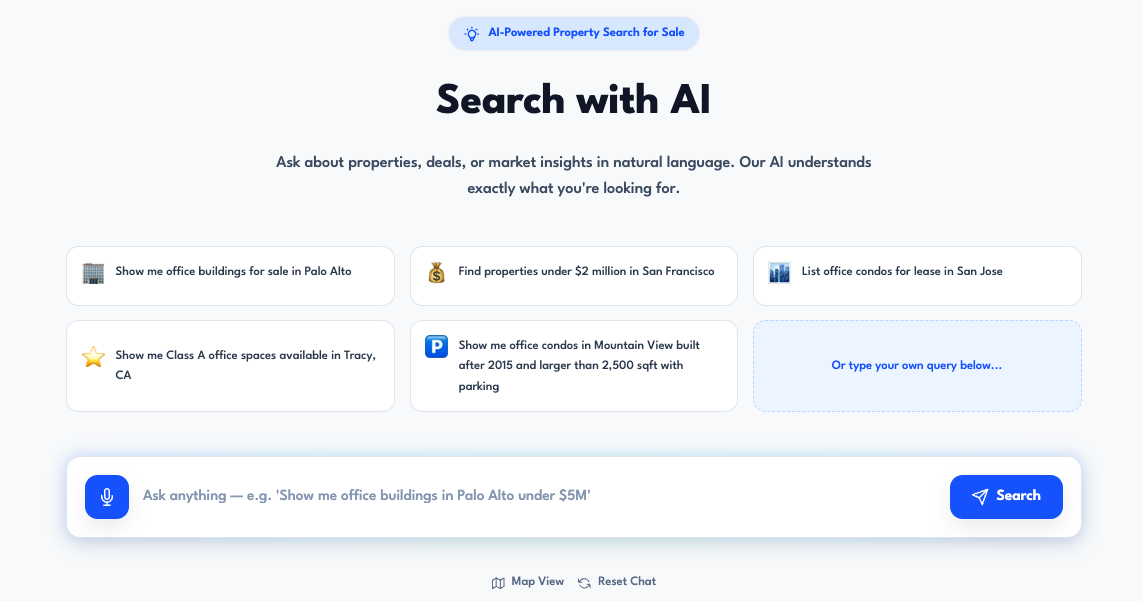
Listings: intake from documents, structured fields for sale and lease, draft-to-publish workflows, and syndication readiness. This is where commercial real estate listing software lives inside the OS. Without a durable listing record, every other module becomes a copy-paste exercise.
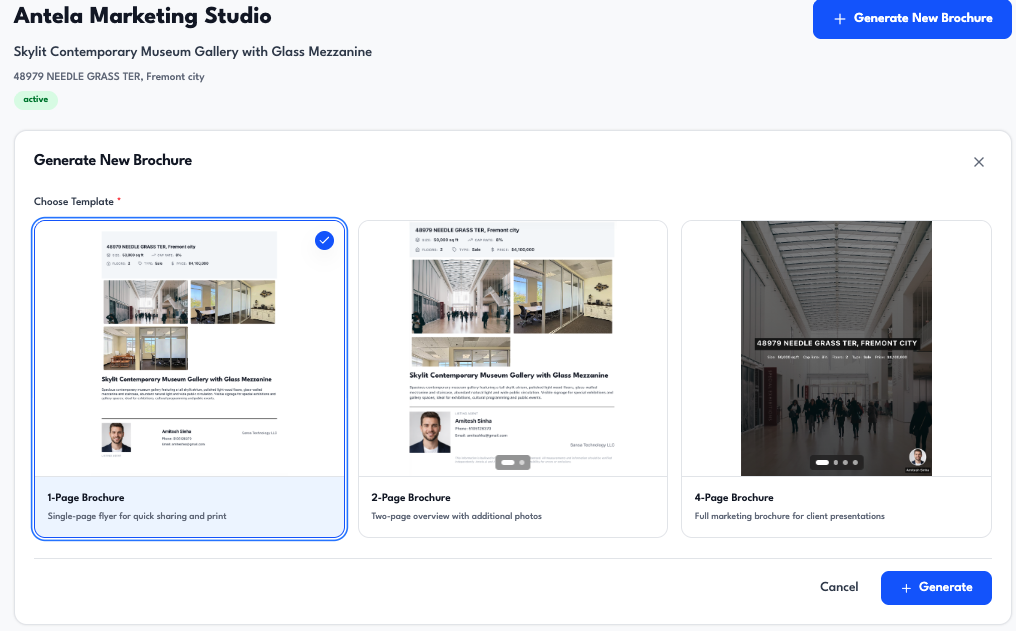
Marketing: offering memorandums, brochures, property websites, maps, email, newsletters, social, and presentations generated from listing data with brand templates and approvals—the job of CRE marketing software. Marketing is usually the highest-visibility proof that an OS is working, because owners and investors see the output.
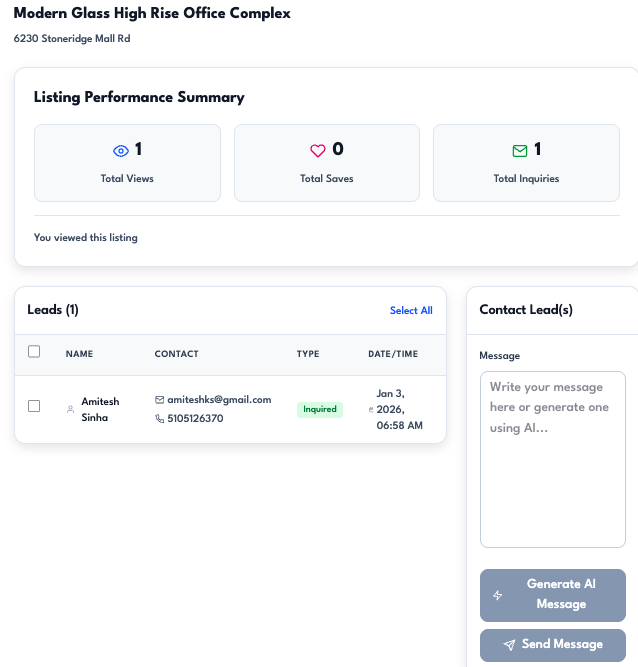
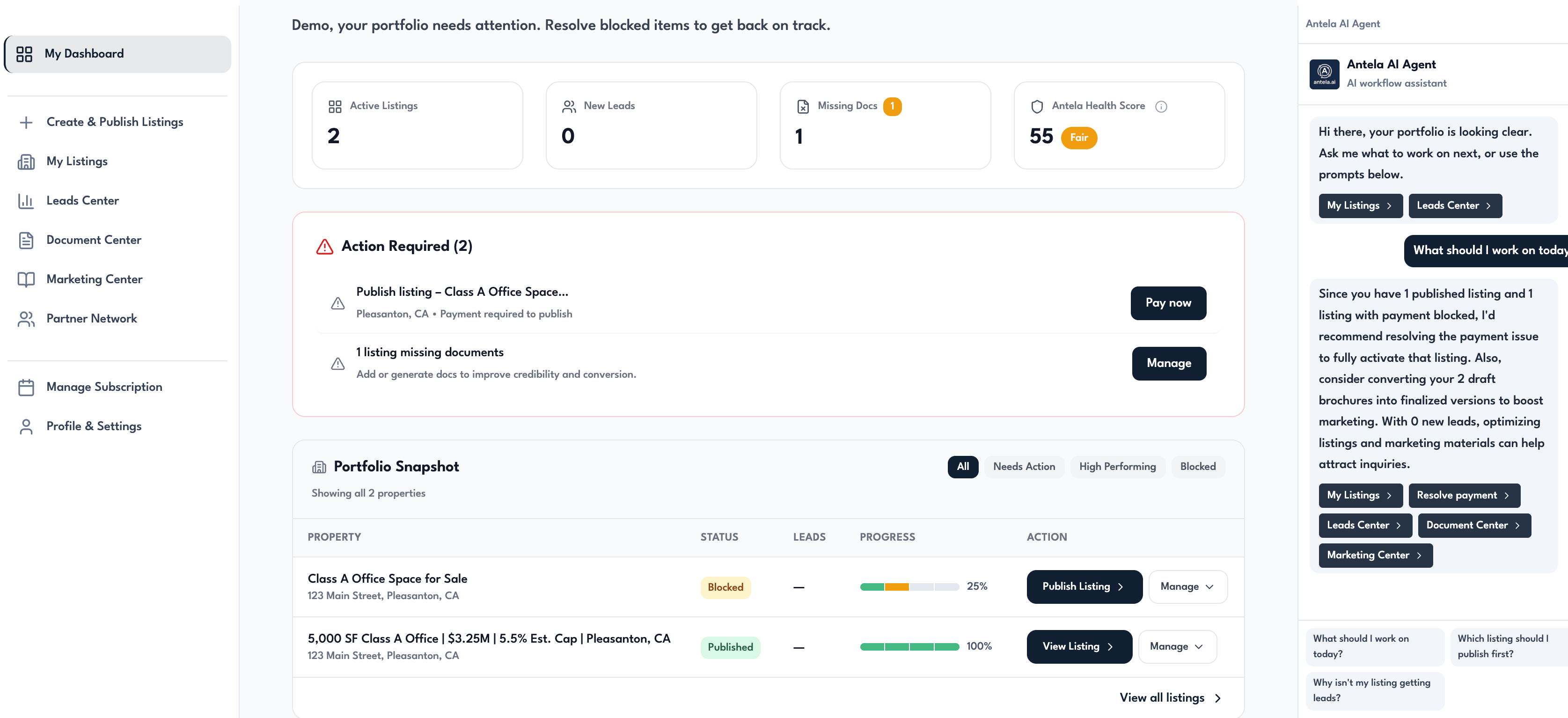
CRM: lead capture, scoring, pipelines, and relationship follow-up tied to listing activity—commercial real estate CRM that knows which property a conversation is about. A CRM disconnected from listings is just another inbox with prettier stages.
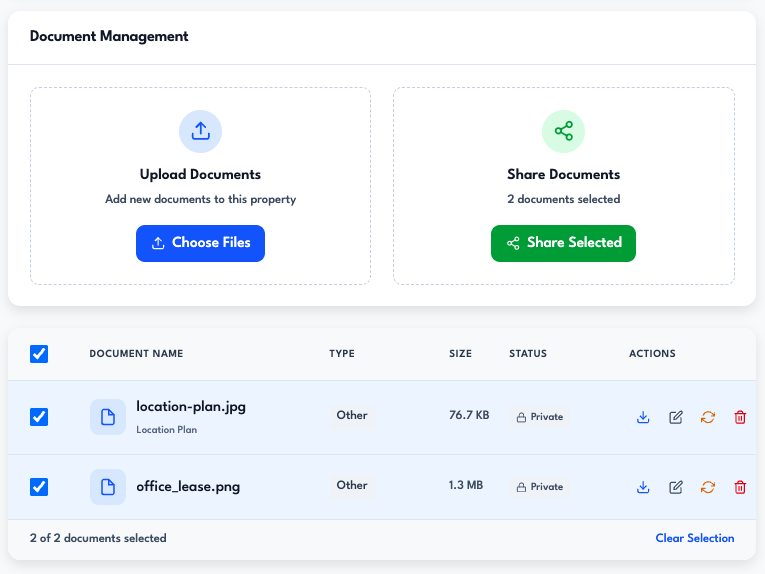
Documents: deal files, leases, forms, and secure collaboration so the OS remains the system of record instead of a shared drive with tribal naming conventions. Document search only helps when permissions and deal context travel with the file.
AI and automation: extraction, drafting, recommendations, and workflow acceleration with human approval for investor-facing output. See AI for commercial real estate and commercial real estate automation software for capability-level depth. The OS is what prevents AI drafts from living in a chat window while the brochure still uses last week’s rent roll.
Faster listing-to-market cycles: the same engagement that used to take a week of coordination can ship in hours when intake, templates, and generation share one record. Measure this on a real deal—not a vendor sample property.
Fewer revision errors: when NOI or SF changes, dependent assets regenerate from the source instead of drifting across email attachments. Principals spend review time on judgment, not hunting mismatched numbers.
More consistent brand: new agents produce packages that look like the firm on day one because templates and approvals are the default path. Boutique firms stop looking uneven; multi-office firms stop looking like five companies.
Cleaner handoffs: marketing, agents, and leadership work from the same status of the listing. That reduces “who has the latest OM?” as a daily operating tax.
Managing brokers and principals who need consistent quality across desks without hiring linearly. Marketing leaders who want brand control and faster listing launches. Operations teams tired of stitching tools. Agents who want professional packages without becoming part-time designers.
Boutique firms often adopt an OS to punch above their headcount. Mid-market firms adopt it to stop office-by-office process drift. Larger firms adopt it to enforce standards while still giving local teams speed.
If your evaluation is driven by replacing a legacy suite, read our Buildout alternative comparison alongside this page—then pilot one live listing end-to-end.
Successful migrations start narrow. Pick one listing type, one office, or one marketing workflow. Time the current process. Run the same listing through the operating system. Compare cycle time, revision pain, and brand consistency—not feature count.
Data migration matters less on day one than workflow adoption. Export priorities: active listings, brand templates, CRM contacts tied to live deals, and document libraries for in-flight packages. Archive historical clutter until the new OS is the daily habit.
Train on outcomes: “publish a listing and launch a campaign,” not “click every menu.” Antela University and the brokerage resource cluster support that rollout pattern.
Morning: a new exclusivity arrives with a messy rent roll and a half-finished prior OM. On an operating system, intake starts once—documents upload into the listing record, extraction populates fields, and gaps are flagged for the coordinator instead of becoming tribal knowledge in a Slack thread.
Midday: marketing generates a first-pass OM and brochure from the same record while the agent reviews financials. Brand templates and disclaimers are already locked. Approvals route to the desk lead without emailing PDFs around the office.
Afternoon: the teaser launches. Inquiries land in CRM tied to that listing. AI scores intent; the agent sends a personalized follow-up that references the correct property. Leadership can see whether the campaign is producing qualified interest without building a spreadsheet.
Next week: pricing changes. On a tool stack, every asset becomes a versioning nightmare. On an OS, dependent assets regenerate from the updated listing record so review focuses on judgment—not hunting the latest file name.
Successful CRE operating system rollouts start with a narrow wedge: one office, one asset class, or one workflow such as investment-sale OMs. Broad cutovers fail when training tries to teach every menu before the team feels a time win on a live deal.
Define success metrics before kickoff—hours to first package, revision turnaround, brand defect rate, and lead response time. If you cannot measure those baselines, you will argue about feelings instead of outcomes at week four.
Change management matters as much as software. Appoint a brokerage owner for templates and approvals. Give agents a guided path from first listing to first campaign. Archive legacy templates so the old path is not the easy path.
Data migration should prioritize active listings and in-flight deal files—not historical clutter. Import brand assets early. Connect CRM contacts tied to live mandates. Leave the archive until the OS is the daily habit.
“We already have a CRM and Canva.” Those tools can remain useful. The OS question is whether listing facts stay synchronized when deals move. If marketing and CRM disagree every week, the stack is costing more than the seat licenses suggest.
“AI will make us look generic.” Generic output comes from automating the pitch. An OS should automate assembly while brokers own thesis and positioning. Brand locks and approvals are how firms raise volume without lowering standards.
“We are too small for an operating system.” Boutique firms often benefit first because headcount is the constraint. An OS lets a lean team ship institutional packages without hiring linearly for every busy season.
“Migrations are too risky.” Risk drops when you pilot one listing type with a timed bake-off. Coexistence is normal for a quarter. The failure mode is a big-bang cutover with no success metrics.
Antela connects listings, Marketing Center, Leads Center (CRM), Document Center, and AI Copilot so brokerage knowledge compounds. Pricing is designed to be all-inclusive for the core stack for most teams—confirm on our pricing page.
You do not need to rip out every tool on day one. Start with listing-to-marketing, prove the operating model, then expand CRM and document workflows. Book a demo with a difficult rent roll, or try Antela with one listing.
For deeper reading, see what is a commercial real estate operating system and brokerage software vs CRE operating system in the brokerage resource cluster—then pilot one live listing.
Suite-level capabilities, standards, and operations for brokerage leaders.
Definition, shared-record test, and evaluation guidance.
How to keep search language clean while you shortlist vendors.
Why digitization isn't automation—and how Level 3 AI changes brokerage software.
What an AI-native brokerage looks like in practice—from faster marketing to connected pre-listing workflows.
Copilot workflows, intelligence, and AI across the brokerage stack.
Where to automate intake, marketing production, and follow-up safely.
Compare an AI operating system vs legacy CRE software.
General AI vs CRE operating system.
Assistant vs full brokerage OS.
Transparent plans for brokerage teams evaluating Antela.
How brokerages adopt Antela across listings, marketing, and CRM.
“We needed one listing record that marketing and CRM could trust—not five tools fighting over the same rent roll.”
Managing Broker
Boutique investment sales
“The win was revision speed. When assumptions change, we regenerate the package instead of hunting files.”
Marketing Director
Multi-office brokerage
“AI drafts get us to a reviewable OM faster. Approvals stay human—and that is exactly how we want it.”
Capital Markets Lead
Regional CRE firm
Want to be featured? Talk with us about a customer story once your team is live on Antela.
The shift toward an AI-native brokerage isn't theoretical. Here's how CRE teams use Antela to win listings, bring properties to market faster, and scale without adding overhead.
Why CRE brokerages need a new software model — not just better features. Digitization isn't automation, and most AI features still leave brokers as human middleware.
How commercial real estate brokerage software differs from a CRE operating system—and how to choose the right evaluation lens.
A clear definition of a commercial real estate operating system—how it differs from CRM and marketing suites, and how brokerages evaluate one.
A practical scorecard for evaluating commercial real estate brokerage software: workflows, brand controls, CRM linkage, pricing, and pilots.
An AI operating system for commercial real estate brokerages connects listings, marketing, CRM, documents, and workflows around shared brokerage data. Instead of re-entering the same property information into disconnected tools, the OS uses that data across the lifecycle—from winning the listing through marketing, lead follow-up, and deal execution. Antela is built specifically for CRE brokerages to help brokers win more deals and close listings faster.
A CRM tracks people, pipelines, and follow-up. An operating system includes CRM plus listings, marketing, documents, and the shared listing record that keeps those workflows aligned. If listing facts and relationship activity disagree every week, you need more than a CRM.
Brokerage software often describes the suite of modules. An operating system emphasizes the shared data model and workflows that connect those modules. Antela is both: an AI OS delivered as commercial real estate brokerage software.
No. Many teams start with listing intake and marketing production, then expand CRM and document workflows once cycle-time wins are proven on live deals.
Yes for brokerages evaluating a move from legacy suites to an AI-native operating system. See our Buildout alternative page for a side-by-side comparison, then pilot one listing.
Map listing-to-launch time today, define brand and approval requirements, shortlist platforms that share one listing record across marketing and CRM, then run a timed bake-off. Use pricing and the ROI calculator for commercial context.
Continue to Antela's commercial real estate operating system — or try the workflow with one listing and book a demo when you're ready.