WIN → MARKET → SERVE → SCALE
Apply AI across the brokerage lifecycle—not a single chat sidebar. Win deals, market properties, serve clients, and scale operations from shared listing data.
Loading…
AI Operating System for CRE Brokerages
Commercial real estate AI software for brokerages—not a chatbot. Antela is the AI operating system that applies CRE AI across listings, marketing, CRM, and documents.
Commercial real estate AI software applies artificial intelligence to brokerage work such as listing intake, BOVs, offering memorandums, brochures, campaigns, CRM follow-up, documents, and deal execution. Purpose-built CRE AI is not a chatbot beside your files. Antela is the AI Operating System for Commercial Real Estate Brokerages: an enablement layer that helps teams WIN more deals, MARKET properties faster, SERVE clients better, and SCALE without added overhead—alongside the CRM, data, and marketing systems they already use.
Apply AI across the brokerage lifecycle—not a single chat sidebar. Win deals, market properties, serve clients, and scale operations from shared listing data.
Learn from prior listings, templates, and completed deals to improve the next package.
Keep brokers and marketing teams in control of approvals for investor-facing materials.
Focus on cycle-time wins: OM drafts, brochures, campaigns, and listing extraction.
Built for commercial real estate terminology, assets, and brokerage roles.
Judge AI on hours saved and fewer revision errors—not demo wow.
AI for commercial real estate—also called commercial real estate AI software—applies artificial intelligence to brokerage workflows such as listing intake, BOVs, offering memorandums, brochures, campaigns, CRM follow-up, document processing, and deal execution. Purpose-built CRE AI differs from a generic chatbot because it works with structured brokerage data and repeatable workflows.
The category is crowded with “AI for real estate” claims. The useful test is whether AI sits on your listing record, brand templates, and deal files—or whether it is a disconnected assistant that cannot update the OM when numbers change.
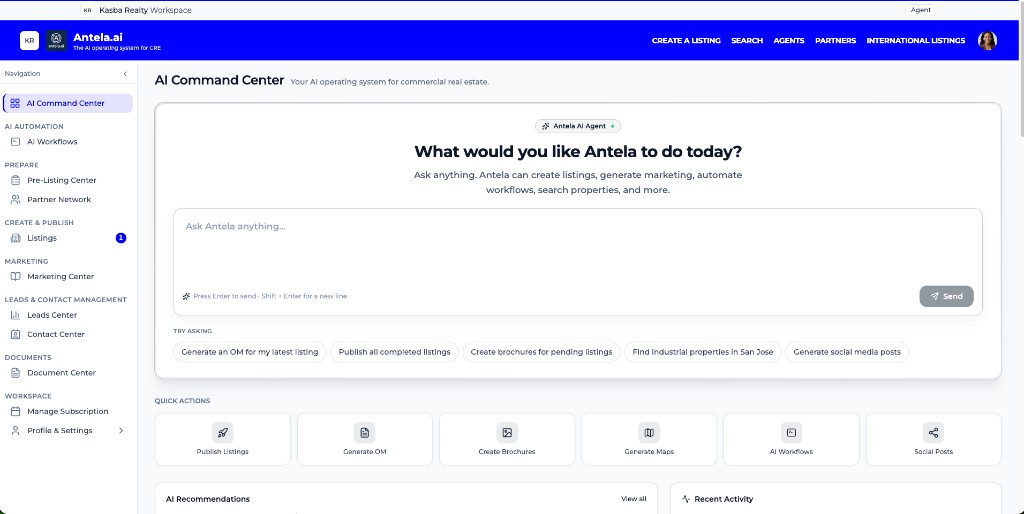
Antela is the AI Operating System for Commercial Real Estate Brokerages. CRE AI software is what buyers search; the operating system is how the work actually runs: WIN → MARKET → SERVE → SCALE, with Copilot as the enablement layer—not a standalone chat tool. Related pages: commercial real estate automation software for workflow automation, and commercial real estate operating system for category framing.
Map use cases to how brokerages actually operate. WIN: BOVs, comparables, market research, and listing presentations. MARKET: offering memorandums, brochures, maps, campaigns, and syndication. SERVE: leads, follow-up, contacts, and documents. SCALE: repeatable workflows, branding, integrations, and institutional knowledge.
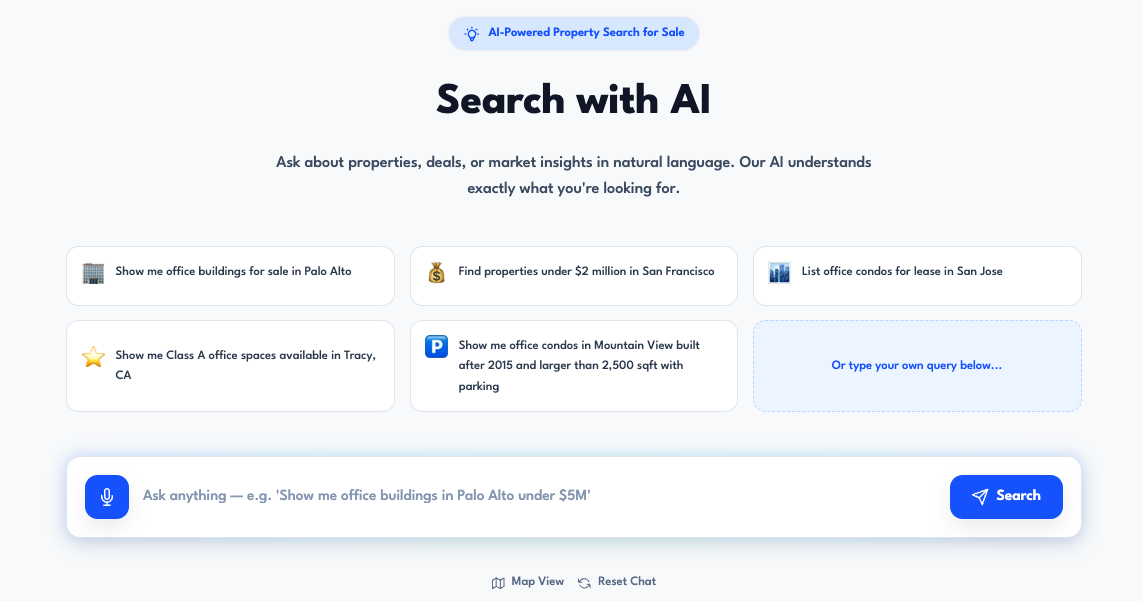
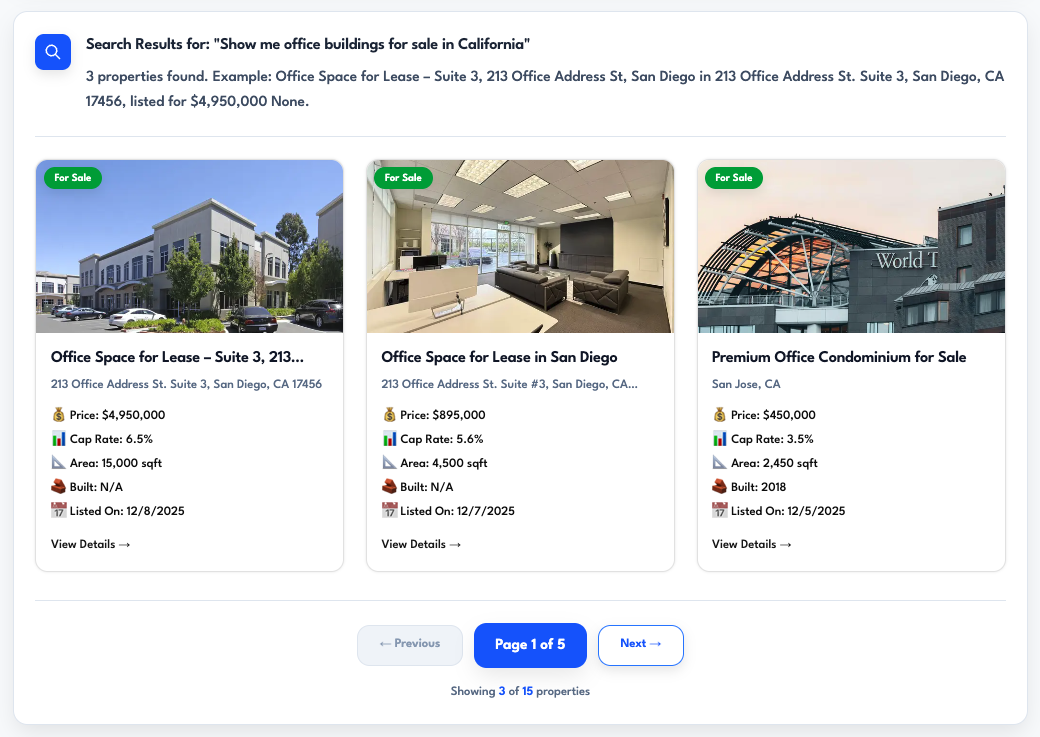
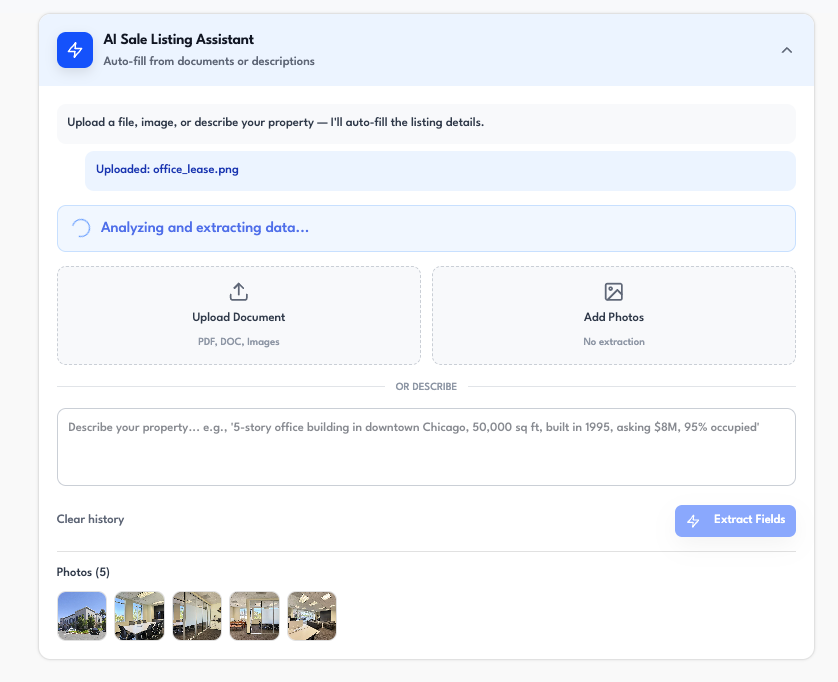
Listing intake: extract addresses, sizes, rents, NOI, and zoning cues from brochures and OMs into structured fields—see commercial real estate listing software. The win is a reviewable draft listing, not a black-box publish.
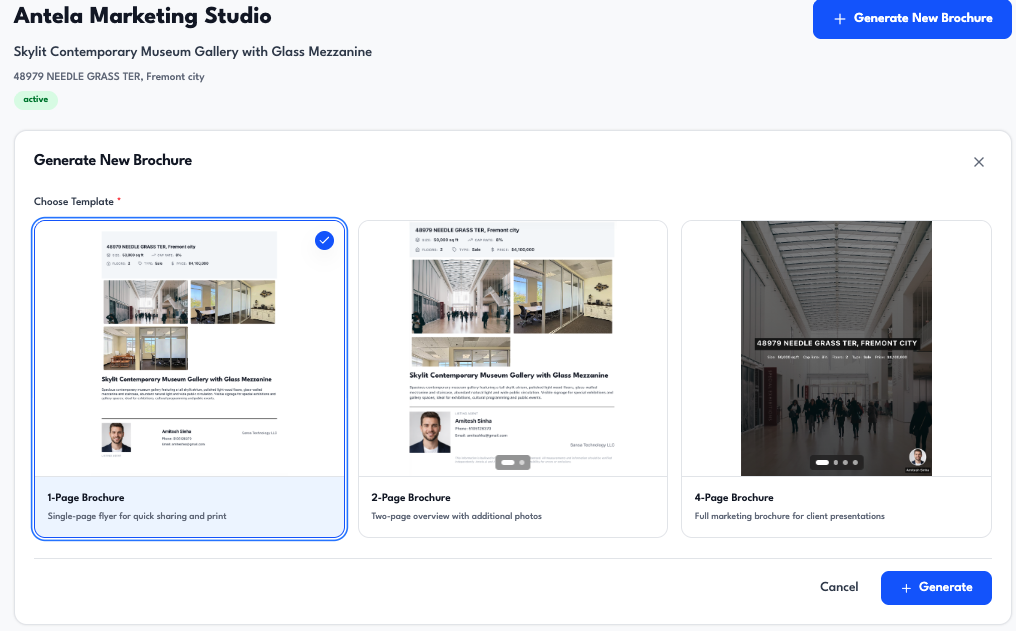
Marketing drafts: generate first-pass offering memorandums, brochures, email copy, and social creatives from listing data with brand applied—CRE marketing software and offering memorandum software. Speed only counts if revision cycles stay clean when numbers change.
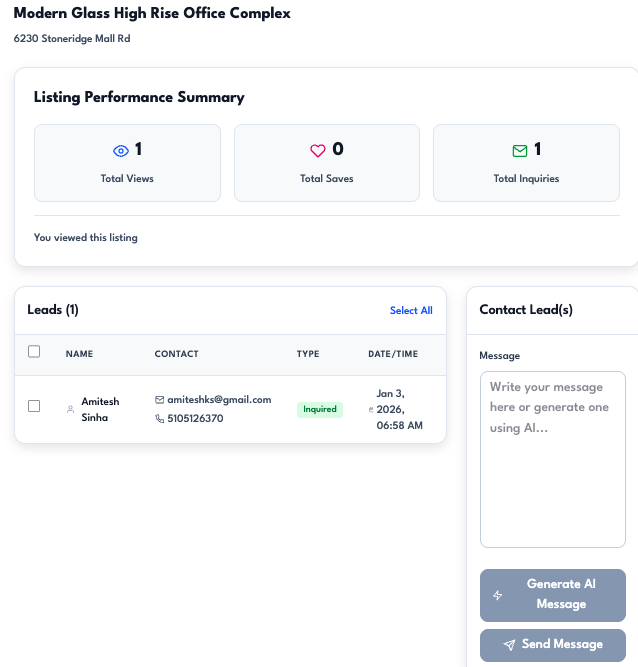
CRM assist: score inquiry intent, draft follow-ups tied to the property, and surface stalled pipeline steps—commercial real estate CRM. Brokers should personalize and send; AI should remove blank-page time.
Document intelligence: find clauses, summarize packages, and keep deal files searchable so institutional knowledge is not trapped in inboxes. AI that cannot see deal context will invent confident nonsense.
Internal Q&A: ask across properties, prior marketing packages, and deal notes to brief a new teammate or prepare an owner update in minutes instead of hours.
Competitive desks also use AI to normalize inconsistent source packages from sellers—turning five PDFs into one structured record before humans debate positioning. That alone can reclaim a full day on messy exclusivities.
AI creates and interprets: drafts, extracts, ranks, recommends. Automation runs the repeatable path: apply template, regenerate assets, route for approval, schedule outreach. Brokerages need both.
Buying AI without automation leaves drafts stranded in chat. Buying automation without AI leaves brittle templates that still need heavy manual fill. Antela connects both inside one brokerage OS.
When you evaluate vendors, separate the demo theater (“watch it write”) from the operating test (“change the rent and update every dependent asset with approvals intact”).
If your RFP forces a single label, prefer the platform that can show both: intelligent extraction and drafting, plus durable workflows that do not require a human to copy outputs into three other tools.
AI should not silently invent comps, fabricate occupancy, or publish investor claims without review. Those failures destroy trust faster than slow manual work ever did.
AI should not replace broker relationships or marketing strategy. It should compress production so humans spend more time on mandates, pricing posture, and buyer targeting.
If a vendor cannot explain failure modes and approval controls clearly, treat the product as a writing toy—not commercial real estate AI software for a regulated, reputation-sensitive business.
Investor-facing materials cannot ship on unreviewed model output. Commercial real estate AI software must support templates, disclaimers, role-based review, and clear ownership of publish rights.
Ask vendors to show a revision: change rent assumptions and regenerate dependent assets. Ask how the model uses brokerage-specific language and prior deals. Ask what never auto-publishes.
Human-in-the-loop is not a slogan—it is the difference between speed and reputational risk.
Bring a real rent roll and a messy source PDF. Time draft quality and revision cycles. Check CRM and marketing linkage. Review security, data retention, and permissioning for multi-office firms.
Prefer platforms that improve with your brokerage’s completed work over generic models that forget brand and deal history. Compare against legacy suites on our Buildout alternative page when that is the incumbent.
Score vendors on five bake-off tests: messy extraction, OM draft quality, revision regeneration, listing-tied follow-up drafts, and permission boundaries between agent and marketing roles.
Generic chat tools are excellent for brainstorming and first-pass prose. They are weak as brokerage systems of record. They do not know your locked disclaimer language, your template structure, your prior deals, or which listing an inquiry belongs to—unless you paste context every time.
Commercial real estate AI software should sit inside listings, marketing, CRM, and documents so outputs stay on-brand and tied to live property data. The difference shows up on revision day: chat tools regenerate text; CRE AI regenerates packages from an updated listing record with approvals intact.
Many teams keep ChatGPT for ad-hoc writing and still need CRE-native AI for production workflows. That is a complementary stack—not evidence that a chat window is brokerage software.
Ask how prompts and documents are retained, whether training uses your deal data, and how office-level permissions work when a boutique firm becomes a multi-office firm.
Investor packages and rent rolls are sensitive. AI features that bypass normal document permissions are a non-starter for serious brokerages—even if the demo looks magical.
Prefer vendors that can explain failure modes clearly: what the model might invent, what always requires human approval, and how audit history works on critical assets.
Measure hours from engagement to first investor-ready package. Measure turnaround after a pricing change. Measure lead response time on listing inquiries. Those three numbers beat “AI messages sent” every time.
Secondary metrics: brand defect rate, coordinator overtime during busy weeks, and time-to-productivity for new agents. AI that only helps power users is incomplete.
Run a 30-day pilot with two live listings including a revision. If the vendor cannot support that bake-off, you do not have enough evidence to buy.
Week one: pick one workflow—usually listing extraction or OM first draft—and capture baseline hours on a recent deal. Assign who owns templates and who approves investor-facing copy.
Weeks two and three: run AI on two live listings with human review on. Include at least one mid-stream number change so you test regeneration, not only the happy-path first draft.
Week four: compare cycle time, revision turnaround, and defect counts to baseline. Expand to CRM assist or campaign drafts only after the first workflow is stable. Teams that turn on every AI feature at once usually stall on trust, not capability.
Antela is more than commercial real estate AI software in the chat-tool sense. It is the AI operating system for CRE brokerages: Copilot, listings, marketing, CRM, and documents share one property record so work compounds across WIN → MARKET → SERVE → SCALE. Pricing for the core stack is designed to be straightforward—confirm on pricing.
Try with one listing, book a demo, or continue into the AI resource cluster for practical guides—including the CRE AI software buyer’s guide and automation playbook.
When you need the workflow layer around AI, continue to commercial real estate automation software and the commercial real estate operating system category page.
Where to automate intake, marketing, and follow-up safely.
Use cases, trust requirements, and bake-off tests.
Rollout plan and KPIs for brokerage automation.
How AI fits inside a full brokerage OS.
AI-assisted OMs, brochures, and campaigns.
Upload-to-OM workflows with review controls.
AI-native platform vs legacy CRE software.
General AI chat vs CRE AI operating system.
AI model vs brokerage workflows that execute.
CRE assistant vs full brokerage AI OS.
Plans for teams evaluating Antela AI.
How teams adopt Antela AI across the stack.
“We needed one listing record that marketing and CRM could trust—not five tools fighting over the same rent roll.”
Managing Broker
Boutique investment sales
“The win was revision speed. When assumptions change, we regenerate the package instead of hunting files.”
Marketing Director
Multi-office brokerage
“AI drafts get us to a reviewable OM faster. Approvals stay human—and that is exactly how we want it.”
Capital Markets Lead
Regional CRE firm
Want to be featured? Talk with us about a customer story once your team is live on Antela.
How to buy commercial real estate AI software: use cases, trust requirements, bake-off tests, and questions that separate CRE-native platforms from chat wrappers.
A practical playbook for commercial real estate automation: what to automate first, guardrails, KPIs, and a 30-day rollout.
A practical list of what commercial real estate brokerages should automate—and what should stay human—across listings, marketing, CRM, and documents.
Commercial real estate AI software applies artificial intelligence to brokerage workflows such as listing intake, BOVs, offering memorandums, brochures, campaigns, CRM follow-up, document processing, and deal execution. Purpose-built CRE AI differs from a generic chatbot because it works with structured brokerage data. Antela delivers that software as an AI operating system for CRE brokerages.
The strongest fit is purpose-built commercial real estate AI software that runs on brokerage workflows—listing intake, OMs, brochures, CRM follow-up, and documents—rather than a generic chatbot beside folders. Antela is the AI operating system for CRE brokerages; evaluate vendors on a live listing bake-off, not demo theater.
Practical uses follow WIN → MARKET → SERVE → SCALE: extract listing data and prepare BOVs, draft OMs and brochures, assist CRM follow-up tied to a property, search deal files, and recommend next steps—with human approval for investor-facing output.
High-value workflows include listing intake, marketing package drafts, campaign assembly, lead scoring and follow-up drafts, document search, and revision regeneration when listing facts change. Automation should sit on shared listing data so outputs stay aligned.
Usually not for production work. Generic chat tools help brainstorm prose, but they do not know your locked templates, disclaimer language, prior deals, or which listing an inquiry belongs to unless you paste context every time. CRE AI should sit inside listings, marketing, CRM, and documents.
Yes. AI can draft tables and narrative from source documents and listing data. Humans should approve investor-facing claims, pricing posture, and final export. See offering memorandum software for product depth.
No. It removes retyping and reformatting so professionals spend more time on judgment, relationships, and winning mandates.
Pilot AI on listing intake and OM/brochure drafts for one live deal, measure hours saved, then expand to CRM assist and automation workflows.
Continue to Antela's commercial real estate AI software — or try the workflow with one listing and book a demo when you're ready.